
Pet Grooming Basics for a Healthy Coat and Skin

Most people think of grooming as something you pay someone else to do every few months. The parts that keep skin healthy happen at home, between those visits, in five minutes at a time.
August is Itchy Pet Awareness Month, which is well timed in a humid climate where fleas, hot spots, and yeasty ears peak in late summer. These pet grooming basics cover brushing, bathing, nails, ears, and teeth, plus what a grooming session tells you about your animal’s health.
Grooming is a health check you do with your hands
The real value is not the shine. It is that a person running their hands over an animal twice a week notices things a person who does not will miss for months.
While you brush, you are checking for:
- Lumps, bumps, and swellings that were not there last time
- Scabs, hot spots, and raw patches
- Fleas, flea dirt, and ticks
- Mats forming behind the ears, under the legs, and around the tail
- Wincing or pulling away when you touch a specific spot
That last one matters most. An animal who suddenly cannot tolerate being touched somewhere is usually telling you it hurts. Call your veterinarian rather than pushing through it.
Brushing, by coat type
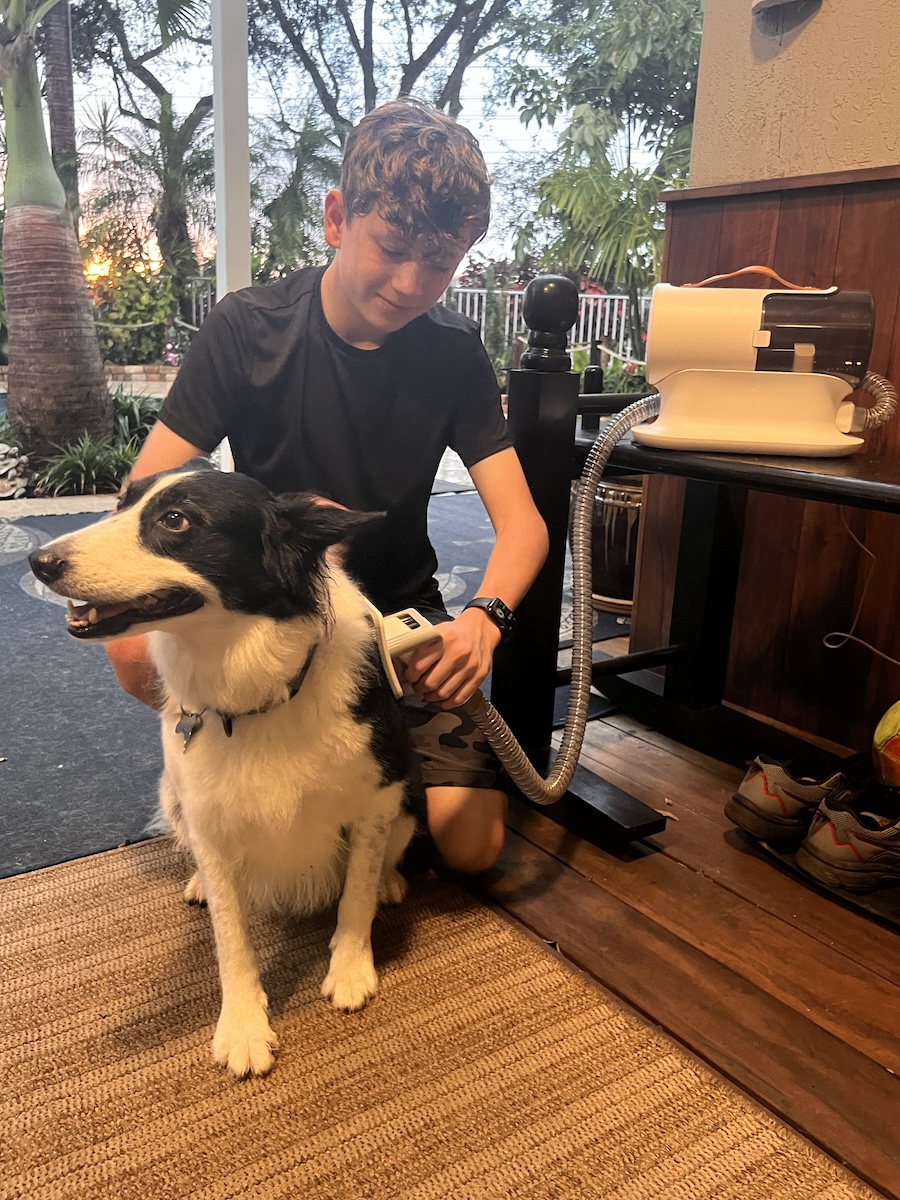
Brushing is the highest-value habit and the one most often skipped. It removes loose hair, spreads natural oils, and prevents mats, which are painful and pull on skin.
| Coat type | How often | What to use |
|---|---|---|
| Short and smooth | Once a week | Rubber curry brush or grooming mitt |
| Short and dense | Twice a week | Slicker brush, then an undercoat rake in shedding season |
| Medium to long | Every other day | Slicker brush, then a metal comb to find what the brush missed |
| Curly or wool | Daily | Slicker brush, then a comb all the way to the skin |
| Cats, short hair | Weekly | Soft brush or grooming glove |
| Cats, long hair | Daily | Fine metal comb, working in small sections |
Two rules for any coat. Brush all the way down to the skin, because brushing only the top leaves mats forming underneath. And never cut a mat out with scissors, since skin tents up into the mat and gets sliced far more often than people expect. Work it apart with fingers and a comb, or let a groomer shave it.
Bathing without wrecking the skin
Over-bathing causes more skin problems than under-bathing. Every bath strips oil, and stripped skin gets itchy and infected.
- Most dogs: every four to eight weeks, or when genuinely dirty
- Most cats: rarely, if ever. Cats groom themselves, and a bath is stressful. Exceptions are medical situations and cats who cannot groom because of age or weight.
- Water temperature: lukewarm, the temperature you would use on a baby
- Shampoo: made for pets. Human shampoo has the wrong pH and dries the skin.
- Rinsing: rinse twice as long as you think you need to. Leftover residue is a leading cause of post-bath itching.
- Drying: towel first, then a dryer only on cool or no heat. Damp fur trapped against skin invites hot spots in humid weather.
If your pet is scratching constantly, a bath will not fix it. Persistent itching means allergies, fleas, or an infection, and those need a veterinarian rather than a new shampoo.
Nails, ears, and teeth
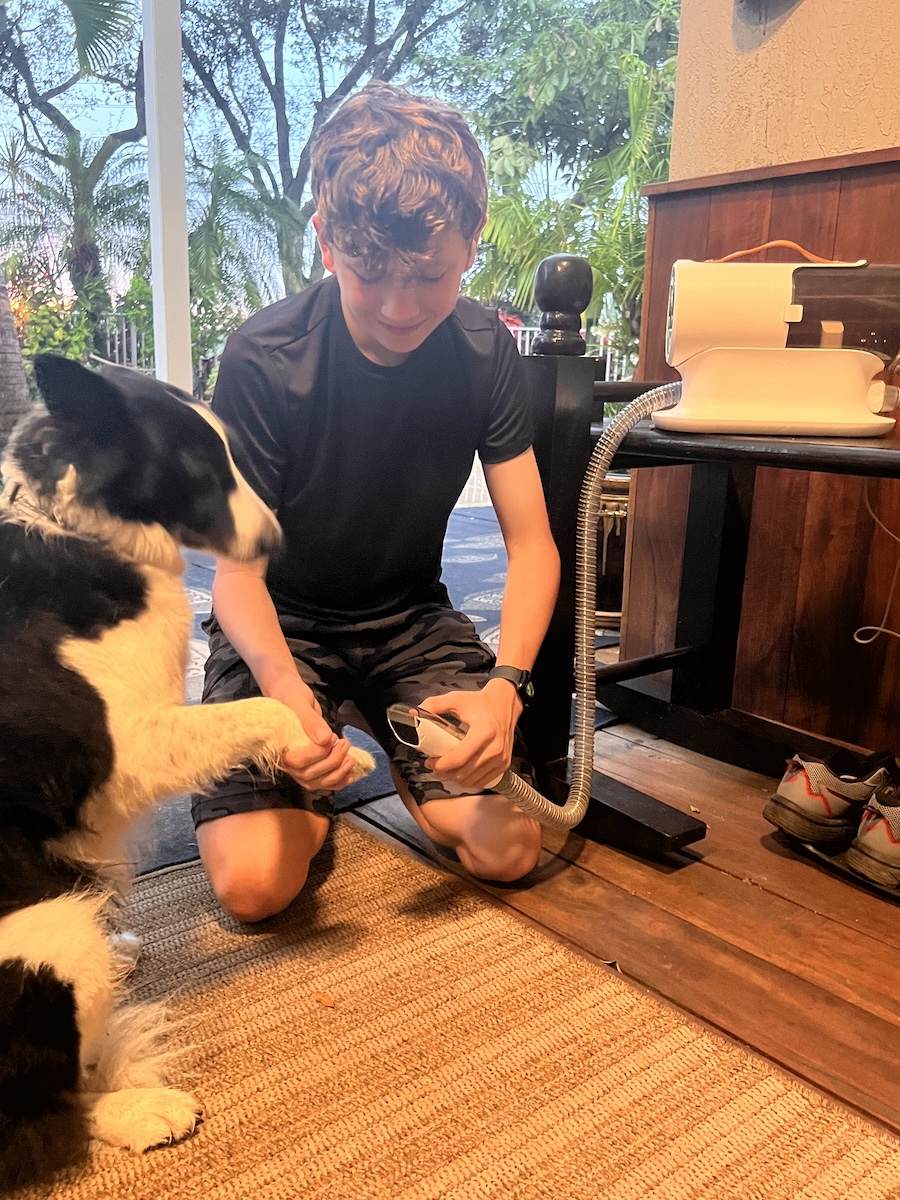
Nails. If you can hear clicking on tile, they are too long. Long nails change how an animal stands and cause real joint pain over time. Trim a small amount every one to two weeks rather than a lot occasionally. Cut only the tip, staying well clear of the quick, the pink area with the blood supply. Keep styptic powder nearby. If your pet panics, trim one nail a day and stop, rather than fighting through all sixteen.
Ears. Check weekly. Healthy ears are pale, dry, and nearly odorless. Redness, dark discharge, or a yeasty smell means a vet visit, not a cotton swab. Never put anything into the ear canal. Wipe only what you can see, using a vet-recommended cleaner.
Teeth. Dental disease is among the most common problems in adult pets and one of the least treated. Brush with a toothbrush and toothpaste made for pets, never human toothpaste, which contains ingredients pets should not swallow. Start with a finger and a taste of the paste, then add the brush over a week. Even three sessions a week helps.
Making grooming something your pet tolerates
Force teaches an animal that hands are a threat, and that lesson carries into vet visits and everything else.
- Start with the easy zone. Shoulders and back before feet, face, or belly.
- Keep sessions short. Two minutes done calmly beats twenty minutes endured.
- Pair it with food. Lick mat, peanut butter, a spoon of wet food. The tool appears, good things happen.
- End before the complaint. Stop while your pet is still relaxed, not after.
- Watch the signals. Lip licking, yawning, turning away, or freezing means take a break.
Rescue animals often arrive with a grooming history you know nothing about. Go slower than you think you need to.
Frequently Asked Questions
How often should I bathe my dog?
Most dogs do well with a bath every four to eight weeks, or whenever they get genuinely dirty. Bathing more often than that strips the natural oils that protect the skin and often makes itching worse rather than better.
Can I use human shampoo on my pet?
No. Human shampoo has a different pH than pet skin and tends to leave it dry and irritated. Use a shampoo made for pets, and rinse thoroughly, since leftover residue is a common cause of itching after a bath.
What do I do about a mat?
Do not cut it out with scissors. Skin pulls up into a mat and gets cut far more easily than people expect. Work small mats apart with your fingers and a metal comb, and let a groomer shave out anything tight or close to the skin.
Do cats need brushing?
Yes, especially long-haired cats, who cannot keep up with their own coat and develop painful mats along the belly and hind end. Short-haired cats benefit too, since brushing reduces shedding and hairballs.
A brush in your hand is a small act of prevention
Neglect usually looks ordinary from the outside. A matted coat, overgrown nails, an untreated ear infection. Learning these basics means your own animals stay comfortable, and it means you recognize when an animal in your neighborhood is not getting the same care.
Pick one habit this week. Brush twice, or trim two nails, or look in both ears. Then pass this along to a new adopter who has not done it yet.



I’ve learned so much from this post! It gave me invaluable information about a proper care and grooming for my puppy.
Incredible tips done in a short form. Could you make a printable for us as a reference, please?
Really enjoy the Q&A at the end of the post. It helps me to remember the information to take with me. Thank you for putting together these doable tips.
I love all information in the post! The table with grooming guidelines is very helpful.
Such a cool post, so necessary post. We too frequently forget how basic care for our pets means a ton of longer, healthier life.